Nibbled by Dinosaurs
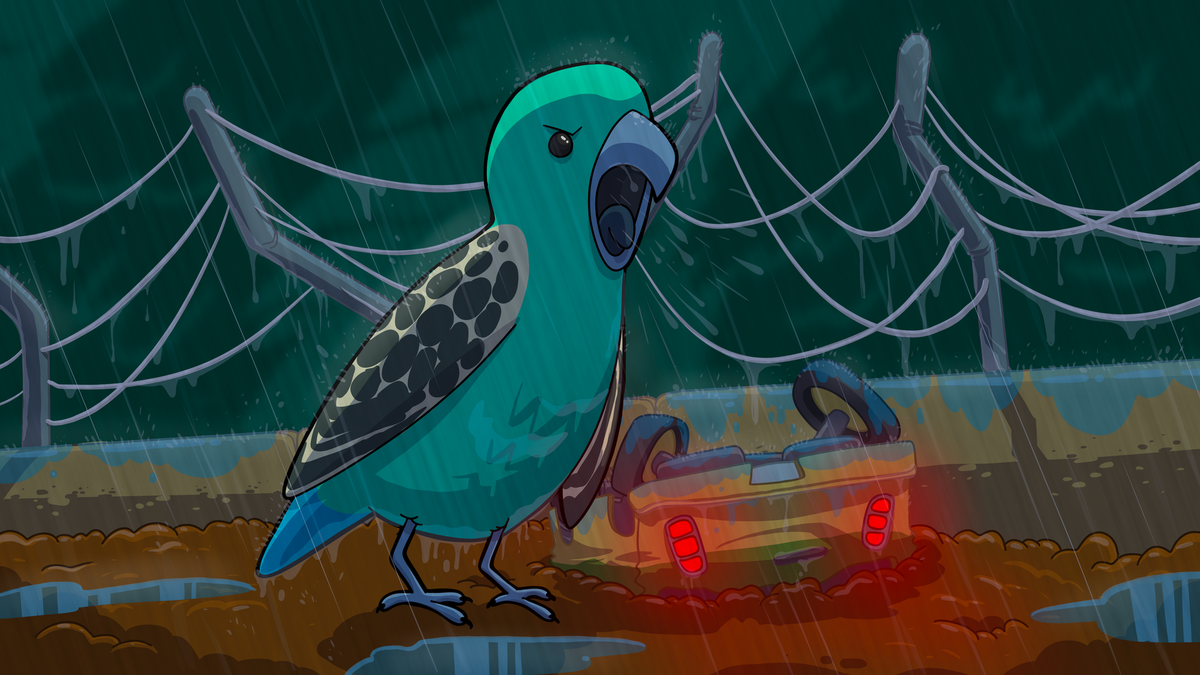
A visit to a budgie aviary can be harrowing. Beware the theropods!
I hope you enjoy this bit of nonsense. If you do, please sign up as a free member to receive future columns via email. If you really did, sign up for one of the paid tiers to get a whole lot of extra fun!
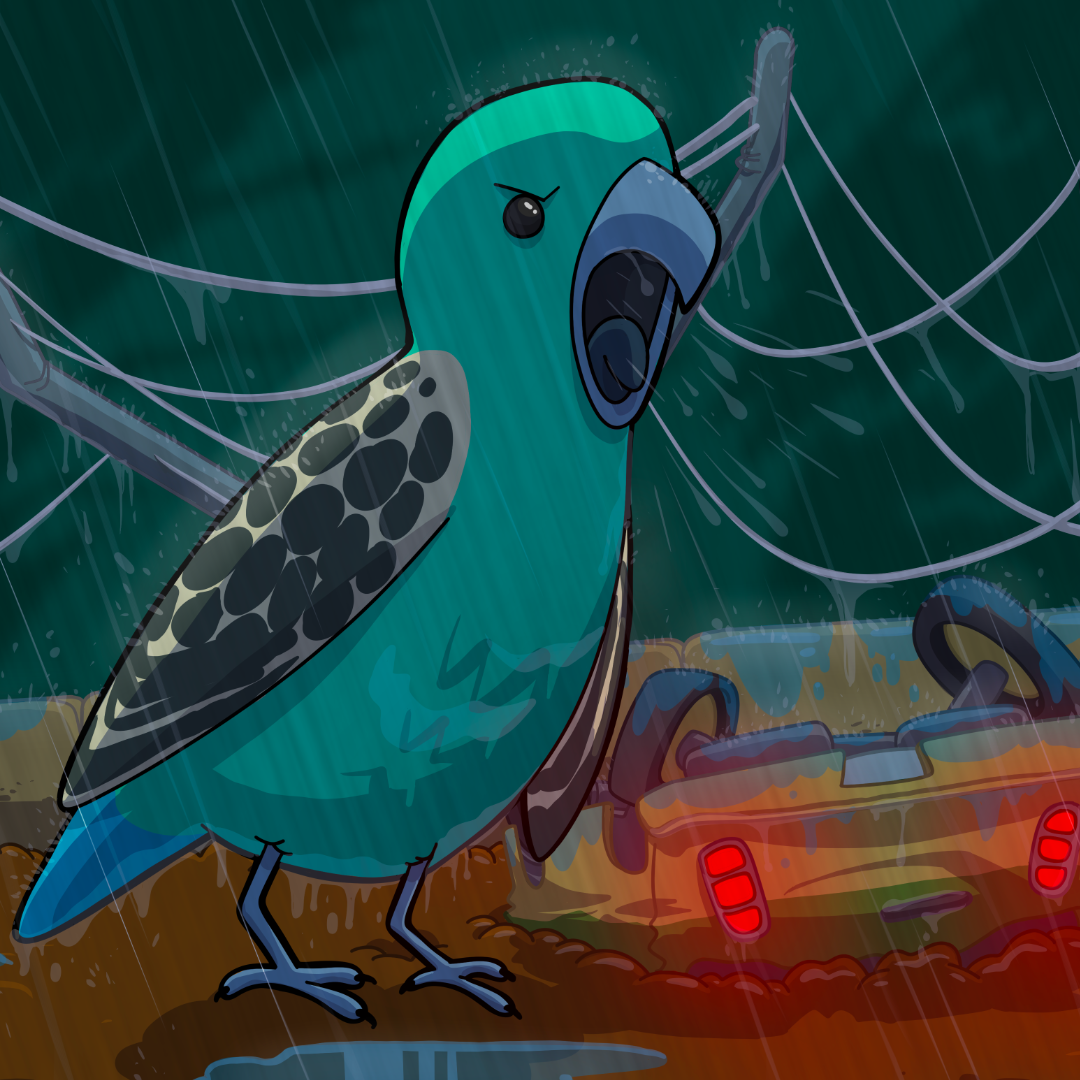
I’ve come to believe that there are lies told to us by scientists in order to keep the public safe and sane. The existence of Bigfoots, perhaps. A cure for saying “thanks, you too” when a server tells us to enjoy our meal. The fact that some plants are mean and enjoy hearing the sound of sneezing.
But few lies are more egregious than the classification of budgies as herbivores. You have to remember that it is widely believed that birds all descended from dinosaurs. And not just from the doofy flying dinosaurs with hard-to-spell names, either. From real dinosaurs. Theropods like Tyrannosaurus rex, velociraptor, and Yoshi, known for their keen intellect, endless hunger for meats, and being ridden by plumbers.
Theropods were not the lumbering, scaly beasts depicted in movies like Jurassic Park or documentary series like Barney & Friends. Theropods were quick, hollow-boned, and festooned with feathers like prehistoric Harry Styleses. Not to imply that Harry Styles is a theropod, of course, but he does flit and dart around the stage very rapidly and, despite reports that he’s pescatarian, I doubt you could stop him at an Arby’s All-You-Can-Meat buffet if such a thing existed.
The common scientific understanding is that terrestrial, bipedal theropods evolved over time into birds. The creatures that float over us like meat kites, taunting us as they defy the Earth’s gravity that so oppressively binds us to the ground. They fill our skies, they poop on our statues, and they attend our Thanksgiving dinners (albeit mostly unwillingly).
There are cute little fluffy birds, fat round aquatic birds, and gross birds that throw up when they’re scared. Due to my wife dumping out twelve bags of birdseed a day onto our deck, we routinely get visits from birds and squirrels (which are not birds and not intelligent and I assume evolved from rocks) who eat to their hearts’ content. And possibly beyond their stomachs’ content, as I’m pretty sure I hear them pop from overeating every once in a while. But they’re mostly small and adorable and unexploded.
Our one-year-old daughter is delighted by the visits from the birds. She likes to watch them hop around amongst the dunes of birdseed that have been provided to them and gobble up their favorite pieces. She watches the skies for more to come and, I think, is disappointed every time an airplane flies by and doesn’t swoop in for a nibble. Sometimes we’ll stand at the back door as a family and watch nature gorge itself on the deck. It’s a lovely moment often ruined by me saying “Oooh, that one’s so little! I could fit it in my mouth!” and my wife telling the baby not to put birds in her mouth.
Based on the growing bird fascination and a love of animals in general, we decided it would be fun to take the little one to a semi-nearby zoo that offers an experience called “Feed the Budgies,” allowing an up-close and personal look at the tiny, colorful theropods that live in an aviary there. I’m choosing here not to name the zoo because I don’t want to scare anyone away from a visit there. It’s a lovely zoo and does all the things a good zoo should. It has knowledgeable zookeepers who genuinely care about the animals in their charge, has funnel cake that is expensive enough to require a payment plan, and provides an opportunity for animals to sit in humiliating cages and remember where their place is in the ecosystem.
So off we went to the zoo, which I’ll refer to here as “The Zoo,” with dreams of meeting and befriending a number of animals. I love befriending animals. Once, at the National Zoo in Washington, D.C., I had a moment with an orangutan who, from the other side of the glass, would perfectly mimic my movements and facial expressions. I stayed and did this for what must have been 30 minutes despite the monkey house smelling like an exhumed carcass. The stately beast drew the line when I pulled out some dice and tried to play craps with it because, as we all now know, most great apes struggle with gambling addiction.
Despite the main focus of our trip being the budgies, we wandered around for a while and pointed out animals to the baby, who sort of noticed that they were there. Over the course of the whole trip, the one-year-old was mostly impressed by the presence of ducks and turtles in the waterways of the zoo, animals that we have at home and can see after a ten-minute walk instead of a two-hour drive and park admission that could fund an entire town’s electric bills for a week.
Finally we arrived at the budgie aviary, a large enclosure covered in netting that held a couple of trees, one brave zoo employee, and approximately 14,000 wee birds. Budgies are native to Australia (which, if you’ll recall, is home to an astounding array of remarkable animals, insects, and flora that all want to kill you) and are, for birds, incredibly needy. If you keep a budgie as a pet, as I know some people do, you have to keep them entertained and make them feel cared for, or they can become depressed. They have a regular need for mental stimulation and validation, so you have to constantly teach them simple tricks, build foraging puzzles for them, and attend their one-bird shows about growing up in which, at some point, they play the father that wouldn’t play catch with them.
The four of us stepped into the enclosure: my wife, my then-thirteen-year-old, my then-eleven-month-old, and myself. Entering the enclosure required stepping through a series of “airlocks” in order to prevent any budgies from escaping. I thought it was for their safety, but I would soon learn that it was actually for the safety of the zoo guests and the zoo animals and, perhaps, the entire world. We were armed with “budgie sticks,” which were essentially popsicle sticks that were dipped in some bird-friendly goo and then coated with birdseed. Since I had made my wife leave her 10-pound travel bag of birdseed in the car, she was thrilled to have an alternative.
The idea was that if you stand there long enough with your popsicle stick, the budgies would come down, alight on you, and nibble the seed. And, at first, that’s exactly what happened. A brightly colored little bird flew down from the tree, landed on my hand, and started nipping at the birdseed. It was magical. I was a Disney princess. This beautiful little featherball had chosen me and was quickly becoming my best friend. I was about to reach for my craps dice when another landed on my arm. And then another on my shoulder. I was quickly becoming very popular with the budgie community. Several children stared up at my three budgies and glanced at their zero budgies with wide, jealous eyes.
At this point, their tiny little clawed feet were starting to dig in a little bit and I tried to get the budgies to hop over to the sticks of the jealous children, but they wouldn’t budge (which I assume is where the name comes from). In fact, instead of subtracting budgies, I was attracting more. And then one bit me. I can’t say for sure, but I think I saw a look in its eyes that connected it to its theropod, carnivorous past. It screamed out to its assembled comrades: “THIS IS WHAT WE ARE, BROTHERS! REMEMBER THE JURASSIC!” and they all started in with pecking and biting. They were all over my arms and the back of my neck and my shoulders, points of pain everywhere.
Wearing my full body suit of flesh-rending dinosaurs, I walked over to the zoo employee with a panicked expression behind my eyes. I didn’t want to scream or outwardly freak out and cause the nearby children (including my own) to be aware of the danger that they were in, especially considering I seemed to be the only target of the animals’ meatlust. “Would you like some assistance in getting them off of you?” asked the zoo employee. I said “yes” in a way I hoped translated to “YAAAARGH OW OW OW.” He showed me a technique by which I would simply brush one hand down the length of my arm to get the creatures to fly away. This worked! Temporarily. I brushed one arm, smearing the blood and exposed muscle all over, and the little predators flew away just far enough so that as I brushed the other mutilated arm, they landed back where they were, tearing and biting their way to the bone.
I was able to distract the budgies by sticking four or five of the popsicle sticks to a nearby young child and tossing them across the enclosure. It wasn’t my finest moment, but it allowed me to grab the baby and escape to the airlock. Once I was outside again, I hesitantly looked at what remained of my flesh, hoping that the zoo had an onsite skin-grafting setup. The impact was slightly less than I had thought, as all of my skin was intact save for crisscrosses of scratches and occasional little holes where their sharp beaks had pinched hard. I had somehow survived the experience.
Looking back in the aviary, all seemed well. No other guests had been so savagely targeted. My wife and teen were having the time of their lives. One budgie stared back at me, blood trickling down its beak, daring me to come back in. But I am no fool. Except for the part where I applied hand sanitizer to my arms, which resulted in a searing pain comparable to putting a white-hot knife up your nose.
The rest of the trip was spent looking around in fear of birds. We saw a few, mostly in other aviaries, but I swear the ostrich we got a few feet from licked its non-existent lips when it saw me.
Because I am the type of person I am, I did some research on budgies when I got home and that’s where I saw The Lie. Herbivores. They eat seeds and grasses. I’ve done a DNA profile before and can say with some confidence that I am 0% seeds and grasses. I’m willing to give science the benefit of the doubt here and say that maybe they believe The Lie. Perhaps scientists who study budgies have not experienced the carnivorous feeding frenzy that I have. Or maybe those scientists didn’t survive the experience and the others didn’t notice. I have no idea how often bird scientists check in on each other.
The important lesson is this: watch the skies. Birds were and are dinosaurs and, like humans, are not to be trusted just because they are cute and colorful and fluffy. All it takes is the right person being nearby to unlock every predatory, flesh-rending instinct inside them. Always be vigilant. Remember the Jurassic.